Navigating Blind Spots Successfully
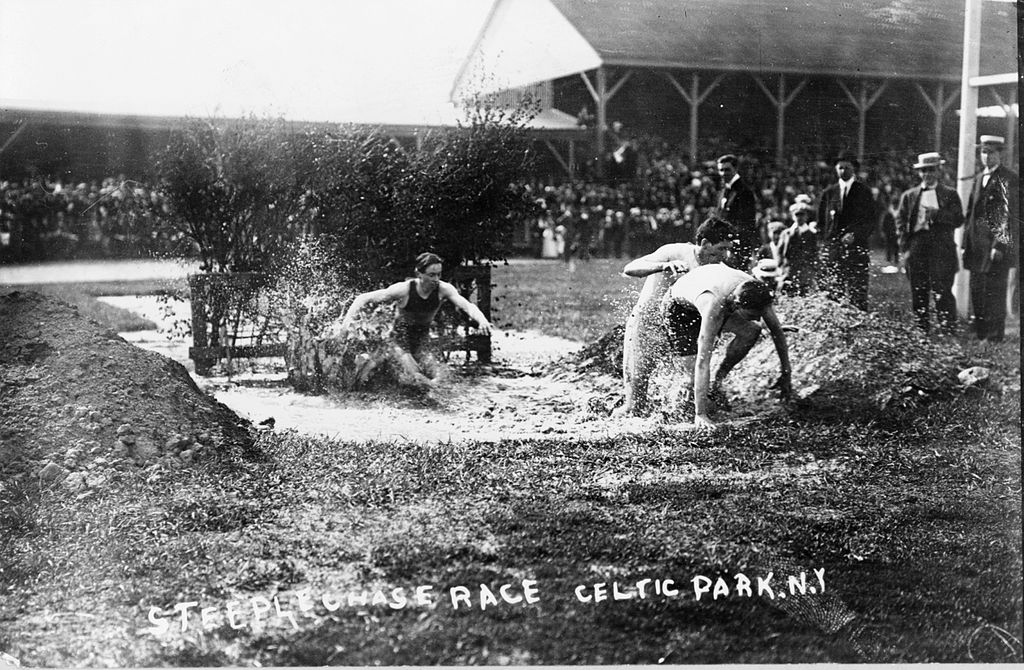
Photo Credit: Unknown
I almost never ran the steeplechase again.
Not because I was injured. Not because I lacked the fitness. I walked away from it because I was embarrassed — and I had convinced myself that embarrassment was the same thing as truth.
Just before my teenage years, I set the American all-time best for my age group in the 3000-meter steeplechase. It was the kind of early result that should have signaled something important about my future in the event. Instead, I filed it away and moved on. I didn't run the steeplechase again for nearly a decade.
When I finally returned to it as an adult, I lined up alongside a 5000-meter Olympian and a field of seasoned veterans. My mile time was 4:00.10. I felt ready — which, in hindsight, was the first warning sign.
The opening laps felt effortless. That ease was a trap. I went out too fast, and by the fourth lap, the race had turned against me completely. I was drowning in oxygen debt, legs heavy, the barriers coming faster than my body could negotiate them. I finished with a respectable time for a first adult race — but I didn't feel respectable. I felt exposed.
I decided, quietly and with great certainty, that I was done with the steeplechase.
A few weeks later, a world-class runner I respected sat across from me and said four words I wasn't ready to hear.
Don't be a quitter.
He wasn't cruel about it. But he wasn't gentle, either. He had watched me race, processed what he saw, and arrived at a conclusion I hadn't: that I had potential in the event I was too proud — or too fragile — to recognize. He saw the ceiling I could reach. I had only seen the floor I'd hit.
I nodded. I thanked him. And I never ran the steeplechase again.
This is the part of the story I'm least proud of. Not the bad race. The not listening.
Years passed. Then came the Ultimate Runner Competition — a grueling multi-event test designed to expose every weakness a distance runner carries. There were moments inside that race, dark and specific moments, when every reasonable instinct told me to stop. The pain had that particular quality that makes quitting feel logical, even responsible.
Each time, I heard his voice.
Don't be a quitter.
I didn't stop. I ran through every one of those moments, and I won — the most significant athletic victory of my life, made possible in part by advice I had initially refused to take.
He had seen my blind spot years before I had. His honesty, which I resisted and then dismissed and then slowly, reluctantly absorbed, had quietly rewired something in me. It surfaced exactly when I needed it most.
We all carry blind spots. This is not a flaw unique to athletes or the young or the proud — it is a condition of being human. We move through our lives with incomplete pictures of ourselves, seeing our failures more clearly than our potential, or sometimes the reverse. The gap between who we are and who we could become is often invisible to us precisely because we are standing inside it.
What closes that gap, more often than talent or discipline or luck, is the willingness to let someone else tell us what they see.
Not everyone who offers feedback has earned the right to give it. That distinction matters. But the people who know us well, who want our growth more than our comfort, and who are honest enough to risk the relationship to tell us the truth — those voices deserve something better than a polite nod and a quiet dismissal.
Pride makes this hard. Ego reframes every piece of honest feedback as an attack, every correction as a slight. It is one of the most effective obstacles to human development ever devised, and it operates mostly beneath our awareness. The runner who goes out too fast in the first three laps rarely knows he's doing it. That's the nature of the problem.
If you are serious about growth — in your work, your relationships, your faith, your craft — find two or three people who will tell you the truth. Not people who will make you feel better. People who will make you better. Ask them directly where they see the gaps. Then do the hardest thing: listen without defending.
Their answer could save you years. In some cases, it could save you from becoming a smaller version of yourself than you were meant to be.
I think about my friend often. I think about the version of my running life that might have unfolded if I had listened sooner — the races I might have run, the potential I left unexplored. There is some grief in that, and I don't try to talk myself out of it.
But I also think about the moment in the Ultimate Runner Competition when his words came back and held me on my feet. The seed he planted didn't take root on his timeline. It took root on mine. And when it did, it was exactly enough.
It is never too late to receive wise counsel. It is never too late to change course.
Don't be a quitter.
Blessings, Coach Weber Philippians 4:13
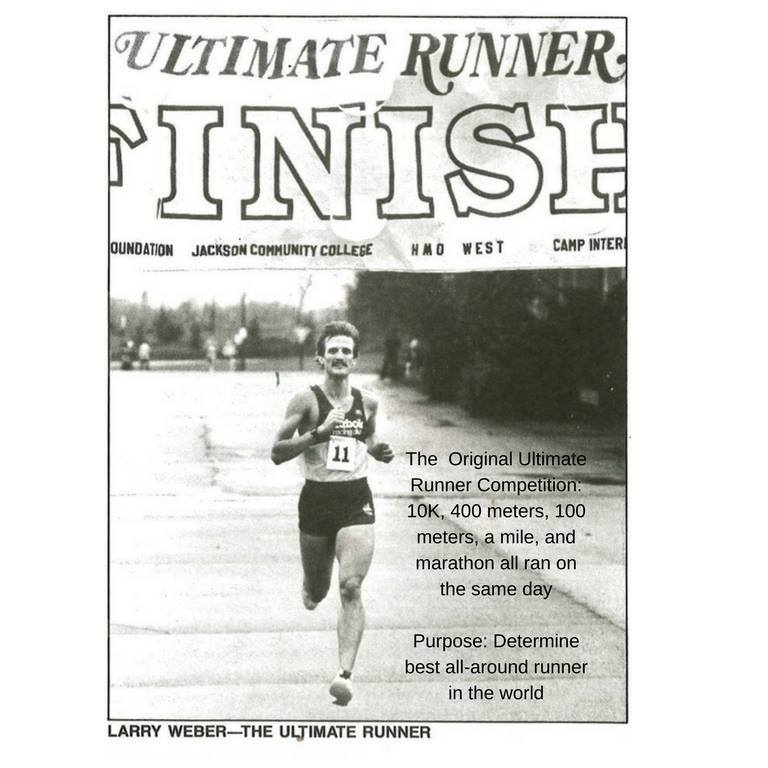
The Original Ultimate Runner Competition consisted of running a 10k, 400 meters, 100 meters, a mile, and a marathon, all on the same day. The race no longer exists in its original form. It was the most challenging race I ever ran. The race aimed to determine the best all-around runner in the world. You can also read about the Original Ultimate Runner Competition for more information about this event.
About the Author
Coach Larry Weber is the author of Jesus on the Track: A Christian Athlete's Guide to Handling Hard Days, Building Mental Toughness, and Growing in Faith. A 2026 Washington State Cross Country Coaches Hall of Fame inductee, Weber has built 13 state cross-country championship programs, coached USA Olympic Marathon Trials qualifiers, and is the all-time record holder in the Original Ultimate Runner Competition (10 k, 400 meters, 100 meters, a mile and marathon all ran on the same day). He writes about faith, running, and formation at coachweber.org.
Jesus on the Track is available on Amazon.com on Kindle and paperback: Amazon.com: JESUS ON THE TRACK: A Christian Athlete's Guide to Handling Hard Days, Building Mental Toughness, and Growing in Faith eBook : Weber, Larry: Kindle Store
His next book, Mile Three: The Hardest Part Builds the Best Kids is scheduled for publication in May of 2026.