The Runner’s Edge: Why Cross Country Changes Everything

By Coach Larry Weber
Foreword: The Quiet Advantage
Cross country is not loud.
It doesn’t flash across highlight reels or command packed stadiums on Friday nights. There are no shortcuts, no instant applause, and no hiding places.
And that is precisely why it matters.
While other pursuits promise quick wins, cross country offers something rarer and far more enduring: formation. Day by day, mile by mile, it shapes young people into adults who know how to work, endure, lead, and remain faithful when no one is watching.
In a world that increasingly rewards speed over substance, cross country teaches patience. In a culture drawn to image, it builds integrity. In a generation hungry for meaning, it quietly forms purpose.
“Do you not know that in a race all the runners run, but only one receives the prize? So run that you may obtain it.” — 1 Corinthians 9:24
Growth rarely comes through ease. It comes through faithfulness.
Introduction: The Sport Nobody Sees Coming
Over decades of coaching, I’ve heard the same hopes voiced again and again by parents:
They want their children to grow in character.
They want them prepared for academic rigor.
They want resilience in the face of pressure.
They want leadership rooted in humility and service.
Cross country delivers all of these—not one at a time, but together.
This is not simply a sport. It’s a formation pathway. A training ground for life. A daily invitation to show up, to work honestly, and to trust that consistent effort produces lasting fruit.
“Whoever is faithful in little is faithful also in much.” — Luke 16:10
Daily habits shape lifelong outcomes.
Part I: What Cross Country Actually Does
Chapter 1: A Category of Its Own
Cross country doesn’t reward early specialization or natural advantage. It rewards presence, commitment, and patience.
Progress is earned through repetition and trust in the process.
Athletes learn that excellence is cultivated, not granted—that becoming better is the result of thousands of ordinary choices made well.
One practice.
One mile.
One faithful day at a time.
“Let us not grow weary in doing good, for in due season we will reap, if we do not give up.” — Galatians 6:9
Faithfulness compounds.
Chapter 2: One Key to Academic Excellence Awaits
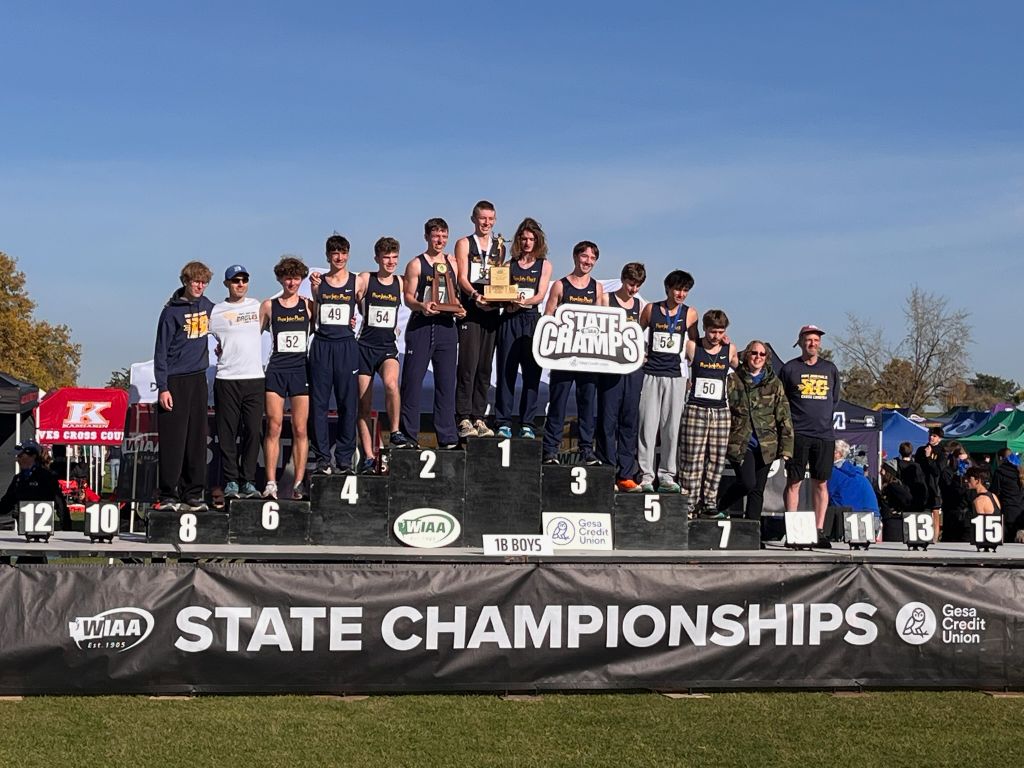
Our cross-country teams prioritize not only success in races but also strong academic performance. We give thanks for the academic state championships we've earned, which underscores our commitment to balancing athletics and education.
The reason for this dual focus lies in the profound impact of running. By training 20–35 miles per week, we effectively rewire the brain. Sustained aerobic activity enhances memory, focus, processing speed, and executive function—all essential skills for excelling in advanced coursework and ensuring success in college.
The discipline required to complete a long run mirrors the discipline required for long-term academic success.
The miles don’t compete with learning. They prepare students for it.
“Apply your heart to instruction and your ears to words of knowledge.” — Proverbs 23:12
Preparation sharpens understanding.
Chapter 3: Honest Effort, Honest Confidence
In cross country, effort cannot be hidden. Preparation reveals itself. So does inconsistency.
This honesty forms students who understand responsibility—not as a burden, but as ownership. They learn humility in success and resilience in disappointment.
Confidence grows not from comparison, but from truth.
They know what they have done.
They know what they have endured.
And that knowledge stays with them long after the season ends.
“The integrity of the upright guides them.” — Proverbs 11:3
Character sustains confidence.
The confidence developed through running is quiet and durable. Athletes trust themselves because they know the work behind their strength.
This confidence is paired with humility. It doesn’t seek attention. It simply shows up ready.
“The Lord is my strength and my shield.” — Psalm 28:7
Strength grows through trust.
Part II: The Body–Mind Foundation
Chapter 4: Health That Supports the Whole Student
Aerobic fitness isn’t merely athletic—it’s foundational. Strong cardiovascular systems support sleep, focus, emotional regulation, and immunity.
Healthy students arrive ready to learn. Ready to engage. Ready to persevere.
Cross country athletes:
- Sleep better and wake rested
- Focus longer during class
- Regulate emotions more effectively
- Recover from stress faster
- Build immune resilience
Caring for the body becomes an act of stewardship, not vanity.
“Your body is a temple… therefore honor God with your body.” — 1 Corinthians 6:19–20
Stewardship begins with care.
You’re not just building a runner. You’re building a foundation for everything else.
Chapter 5: Staying Steady When It’s Hard
Cross country teaches students how to remain composed under discomfort. They learn patience, emotional regulation, and perseverance—skills that transfer directly into exams, relationships, and life decisions.
They learn that discomfort is not danger.
That pressure can be met with calm.
That endurance quiets the heart.
“When anxiety was great within me, your consolation brought joy to my soul.” — Psalm 94:19
This is the resilience colleges look for—and life demands.
Part III: Leadership and Community
Chapter 6: How Running Creates Leaders
Cross country produces a specific type of leader—one that colleges, careers, and communities desperately need.
The best teams are built on encouragement. Leadership emerges not through dominance, but through service.
Athletes learn that lifting others is the highest form of leadership.
“Whoever wants to become great among you must be your servant.” — Matthew 20:26
These athletes learn to:
- Lead through encouragement, not domination
- Show up when motivation disappears
- Support teammates ahead of personal glory
- Work when no one’s watching
The pattern repeats: cross country captains become student leaders, community organizers, and servant leaders.
Chapter 7: The Team That Makes Everyone Better
Unlike individual sports, cross country success depends on collective improvement. Unlike most team sports, every athlete races simultaneously—no bench, no substitutes.
This creates something rare: a culture where everyone’s growth matters.
Faster runners pace slower teammates. Struggling athletes receive genuine encouragement. The team wins when the fifth runner improves—not just the star.
“Iron sharpens iron.” — Proverbs 27:17
This teaches collaboration without competition, excellence without ego.
Voices from the Course:
"Running taught me how to trust the process when results didn’t come right away. That lesson changed how I approach school and life".
"There were days running felt like prayer—alone with my thoughts, learning gratitude and perseverance".
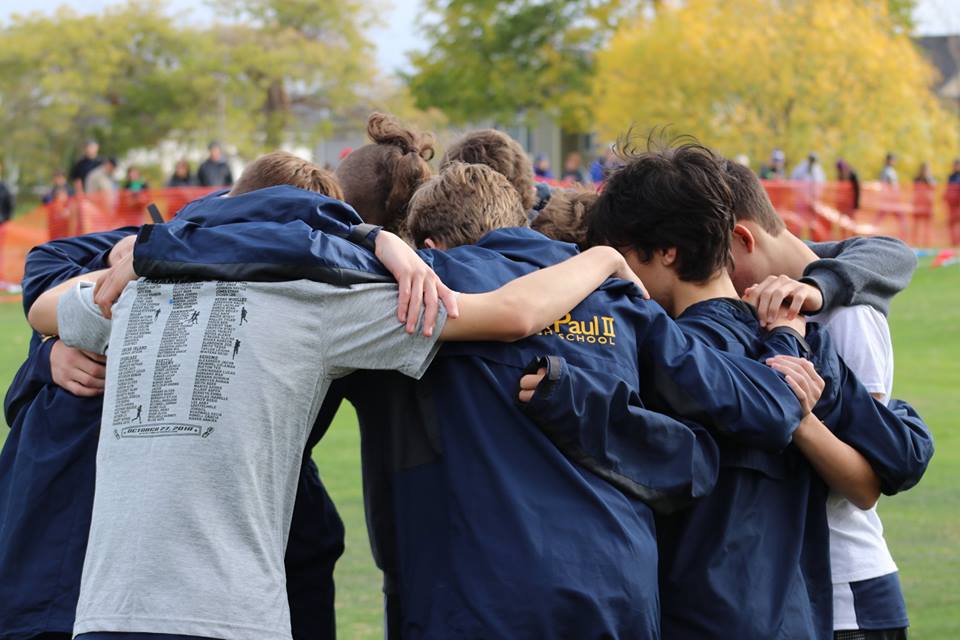
"We ran better together—and became better people together".
Part IV: The Formation Factor
Chapter 8: Discipline That Transfers Everywhere
Cross country teaches consistency when motivation fades. These habits migrate naturally into academics, faith, and responsibility.
Students learn to honor commitments—even when no one is enforcing them.
Cross country has no hacks. No recruiting loopholes. No shortcuts to varsity.
Progress requires:
- Consistent daily effort
- Delayed gratification
- Work nobody sees
- Trust in the process
“Whatever you do, work at it with all your heart.” — Colossians 3:23
These are exactly the habits that predict long-term success—in college, careers, marriage, parenting, and faith.
The sport doesn’t just test character. It forms it.
Chapter 9: Faith, Discipline, and the Long Race
Many families discover cross country reinforces their deepest values:
Stewardship — caring for the body as a gift
Faithfulness — showing up when it’s hard
Perseverance — trusting the process
Humility — accepting honest assessment
Service — lifting others
Purpose — running the race set before us
Whether your family is faith-centered or not, these principles create adults who live with integrity and meaning.
For families of faith, cross country becomes something deeper: a daily practice of discipline, trust, and formation that mirrors the spiritual life itself.
“Commit your work to the Lord, and your plans will succeed.” — Proverbs 16:3
Part V: Getting Started
Chapter 10: What Parents Need to Know
Starting cross country doesn’t require:
- Athletic background
- Perfect fitness
- Elite genetics
- Expensive equipment
It does require:
- Consistency
- Patience
- Trust
The investment: running shoes and commitment.
The return: transformation.
Chapter 11: The Questions Parents Always Ask
What if my child isn’t fast?
Speed develops. Character matters more.
Will this hurt their other commitments?
Cross country reinforces academics and time management.
Isn’t this just for certain kids?
The sport works for anyone willing to show up consistently.
How do I know if it’s working?
Look for better focus, confidence, friendships, responsibility, and purpose.
Conclusion: Finish Well
Every mile teaches something.
Every season forms something deeper.
Cross country prepares students not merely to compete—but to live with purpose, discipline, and faithfulness.
Years from now, your child won’t remember their 5K time.
They’ll remember learning that:
- Consistent effort compounds
- Discomfort isn’t danger
- Teams make individuals better
- Faithfulness sustains everything
- Character is built in unseen miles
“I have fought the good fight, I have finished the race, I have kept the faith.” — 2 Timothy 4:7Why Families Choose Cross Country
Families choose cross country because it offers:
*Lifelong health
*Academic reinforcement
*Emotional resilience
*Character formation
*Leadership development
*Community and belonging
*Purpose and meaning
Start Today
Show up to practice. Trust the process.
The course is waiting.
Blessings,
Coach Larry Weber
Philippians 4:13
References
· Erickson, K.I. et al. "Exercise training increases size of hippocampus and improves memory." Proceedings of the National Academy of Sciences, 2011
· Hillman, C.H., et al. "The effect of acute treadmill walking on cognitive control and academic achievement in preadolescent children." Neuroscience, 2009
· Donnelly, J.E., et al. "Physical Activity, Fitness, Cognitive Function, and Academic Achievement in Children." Journal of Pediatrics, 2016
· Cotman, C.W. et al. "Exercise builds brain health: key roles of growth factor cascades and inflammation." Trends in Neurosciences, 2007
· Jones, M.V., et al. "Psychological resilience in sport performers: A review of stressors and protective factors." Journal of Sports Sciences, 2012
· Bandura, A. "Self-efficacy: The exercise of control." Freeman, 1997
· Fraser-Thomas, J., et al. "Youth sport programs: an avenue to foster positive youth development." Physical Education and Sport Pedagogy, 2005
· Duckworth, A.L. et al. "Self-discipline outdoes IQ in predicting academic performance of adolescents." Psychological Science, 2005
Written with the assistance of AI tools; all content and insights are the author’s own. Copyright 2025 Worldwide