One Of The World’s Best Running Coaches
COACHWEBER.ORG | A TRIBUTE
Dr. Jack Daniels | April 26, 1933 – September 12, 2025
A tribute to a man who taught the world to run — and to the people who helped make it possible.
By Coach Larry Weber | coachweber.org
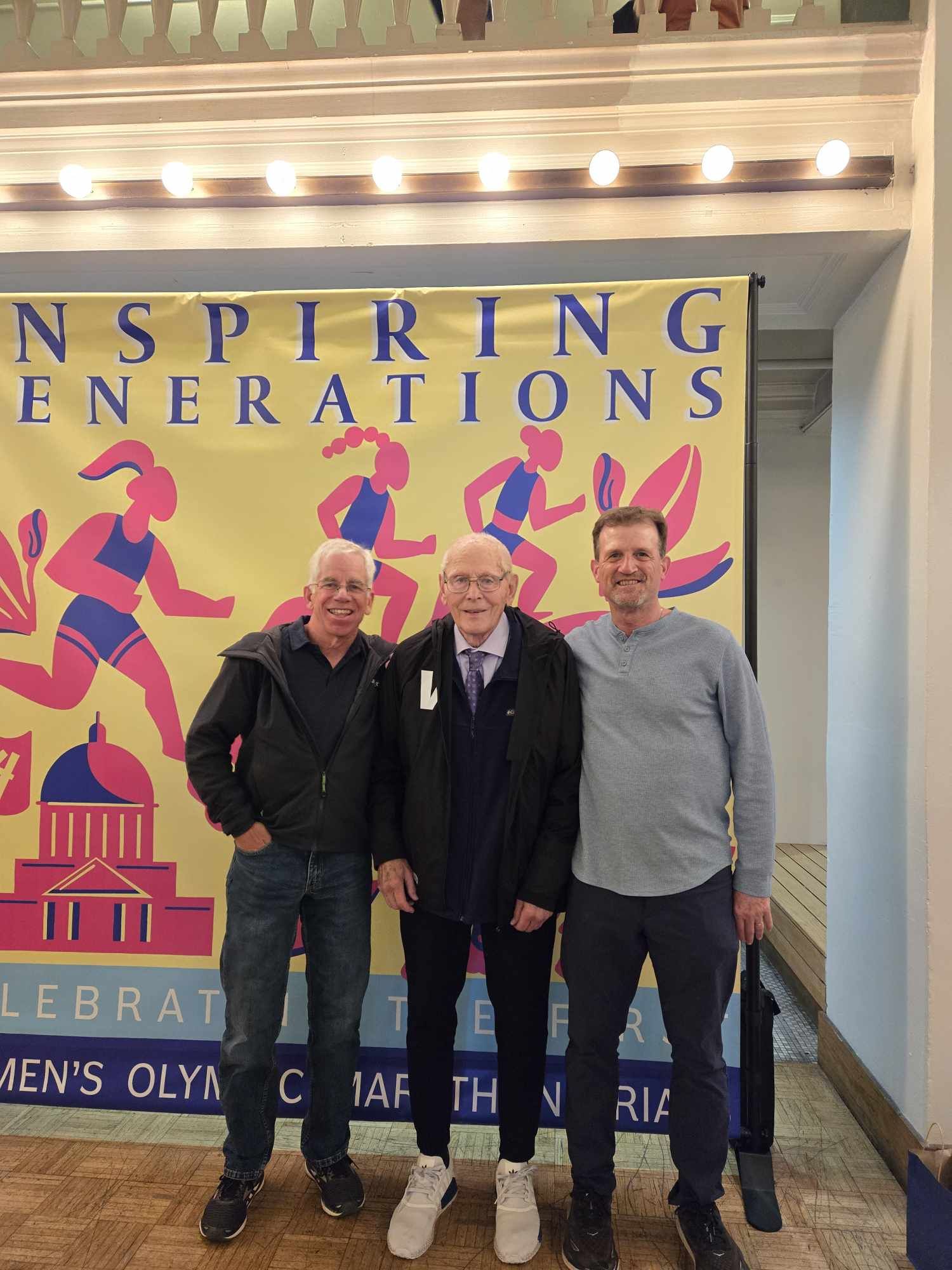
A Note from Coach Weber: I originally wrote about Jack Daniels after spending many hours in his coaching classes, implementing his training principles with my own athletes, and having the privilege of interviewing him and Nancy Jo personally, and of knowing them outside of running circles. In May of 2024, I had the additional honor of leading what would become one of Jack’s final major public panels — a celebration of the 40th anniversary of the first U.S. Women’s Olympic Marathon Trials, held right here in Olympia, Washington, with Jack and Nancy Jo on the stage. When Jack passed on September 12, 2025, I did not rush to write. Some stories deserve time. I wanted to sit with it, process it properly, and do justice to the man—and to Nancy Jo, who helped, supported, and contributed to his amazing legacy on and off the track. When the New York Times staff was preparing its tribute, they reached out to me, and I shared some information on one of my prior stories about the Daniels. I offer this article humbly, as a coach who was fortunate enough to know part of their story.
Image: Dave Gordon, Dr. Jack Daniels, Larry Weber
On the evening of September 12, 2025, Jack Daniels watched the Green Bay Packers win a football game, smiled, and slipped away peacefully at the age of 92. His wife, Nancy Jo, said simply that he died happy. The Packers had won. The people he loved were near. It was enough.
For those of us in the distance running world, it was not nearly enough time. It never is when someone has given as much as Jack Daniels gave.
Runner's World Magazine called him the "World's Best Running Coach," a title that reflects his true impact on the sport. His influence extends far beyond his direct coaching, as his resources, such as the Daniels Running Formula, have shaped top training programs worldwide. My former teammate from the University of Montana, Dave Gordon, who was the alternate for the 1984 U.S. Olympic Marathon, expressed this sentiment even more effectively than any magazine could.
“Jack was a remarkable coach, but he was so much more. He was humble and kind, with a great sense of humor. Jack loved sharing a good laugh with friends." — Dave Gordon, University of Montana teammate and 1984 U.S. Olympic Marathon alternate.
Dave knew Jack in a way few people did—he was an athlete who ran for Athletics West, Nike's first professional running club, where Jack served as an exercise physiologist and coach. Their connection was forged not in a classroom but on training roads, amidst hard work. What Dave remembers most is not the science but the man himself.
That tells you everything.
A Bond Forged in Missoula
Jack Daniels, Dave Gordon, and I are all graduates of the University of Montana in Missoula. Jack preceded us by a couple of decades, graduating in 1955 with a double major in physical education and mathematics. Dave and I followed years later, running together on a Montana team that, in our era, produced some of the finest distance runners in the country under coach Marshall Clark, who also coached Olympians Tony Sandoval, Don Kardong, and Duncan McDonald while coaching at Stanford. Dave ran 2:11 in the marathon and placed fourth at the Olympic Trials. Our teammate Tom Raunig ran 2:12 and finished tenth at the USA Marathon Trials, and ran alongside Dave on Athletics West, Nike’s first professional running team. Other members of our cross-country team went on to become USA Track and Field or Olympic Trials qualifiers as post-collegiate athletes. It was a golden era of Montana distance running.
When I first reached out to Jack for an official interview — after knowing him for years as a participant in his seminars — that shared Montana connection opened a door that might otherwise have taken years to unlock. We swapped stories about Missoula the way old friends do, even though we had come to the university in different eras. The Big Sky, the fishing, the cold, the training — these things do not change. They are woven into the landscape, and anyone who has spent serious time there carries them.
Jack’s years in Missoula were not comfortable ones. He lived in a small structure he called the Shack, where the refrigerator was the warmest spot in the building during Montana winters — holding around 35 degrees while everything else froze. He rose in the middle of the night to stoke the wood stove. He walked to campus every morning to shower. He hunted and fished not for recreation but for food. He was a member of the ROTC program and tried his hand at smoke jumping — parachuting into backcountry wildfires to help contain them.
He spoke about all of this without a trace of complaint. What he remembered was the beauty of the state, the quality of the fishing, and the lessons that hard living builds into a person that no classroom can replicate. He lived the word grit before it became fashionable in coaching circles. And he made it look effortless, because for him, it simply was who he was.
The Olympian Who Learned to Run
After Montana, Daniels served in the U.S. Army in Korea, where he discovered the modern pentathlon. Of its five disciplines — shooting, fencing, swimming, equestrian, and running — running was his weakness. He fixed that with the same methodical intensity he would later bring to coaching thousands of others. He earned a team silver medal at the 1956 Olympics in Melbourne and a team bronze medal at the 1960 Olympics in Rome. Between those Games, he became the first foreigner ever to win the Swedish National Championships in the pentathlon.
What he treasured most from that Swedish victory was not the medal. It was a ten-year-old girl who walked up afterward and handed him a small bouquet of wildflowers she had picked herself. He kept that memory closer than any Olympic hardware for the rest of his life. It is the kind of detail that tells you who a man really appreciates.
He pursued a Master’s degree from the University of Oklahoma and a doctorate in exercise physiology from the University of Wisconsin in 1969, where, as a graduate student, he also tested the Green Bay Packers, beginning a lifelong devotion to that team that would last until his final evening on earth.
The Science That Changed Everything
At Oklahoma City University in the early 1960s, Daniels met Jimmy Gilbert, a mathematical genius who later wrote computer programs for the Apollo lunar module. Together, they developed the VDOT training tables — a system connecting a runner’s current race fitness to precise training paces across every intensity zone. The basic tables they created in the early 1970s are still in use today, essentially unchanged.
Dave Gordon encountered this system firsthand when he ran for Athletics West — the professional running club Jack helped build for Nike in Eugene, Oregon, the first pro running team in American distance running history. Jack was the exercise physiologist and coach who brought rigorous science to the training of the nation’s best distance runners as an advisor or coach. Dave ran alongside athletes like Bill Rogers during that era, while Jack was in the background, measuring, calculating, and refining — always asking how to make each athlete better. Bob Sevene was Dave’s coach, but Jack helped many others with conversations in the background and with his research.
Nancy Jo, during our interview, was careful to note the essential role Jimmy Gilbert’s contributions played in the entire system. She had a gift for ensuring credit went to the people who deserved it, even when they were not in the room. That was very much who she was.
Daniels later wrote his landmark book, Daniels’ Running Formula, while serving as head distance coach at the Center for High Altitude Training on the Northern Arizona University campus in Flagstaff. First published in 1998 and now in its fourth edition, it remains in print and in coaches’ hands worldwide. The language we use daily in distance coaching — VDOT, tempo run, threshold pace, easy day, interval, repetition — traces in significant measure back to this one man and his quiet, relentless pursuit of understanding.
Joan Benoit, a Bicycle, and History Made in Olympia
In 1984, Jack was working for Nike when Joan Benoit underwent knee surgery just 17 days before the first-ever U.S. Olympic Marathon Trials for women, held right here in Olympia, Washington. She needed to maintain aerobic fitness without bearing weight on the injured leg. Jack rigged a bicycle to the ceiling so she could pedal with her hands. Benoit made the team, went to Los Angeles, and won the gold medal in the first women’s Olympic Marathon.
Dave Gordon was part of that same Olympia story (his hometown is Olympia, WA), though on the men’s side. Running for Athletics West, he finished fourth at the 1984 U.S. Olympic Marathon Trials, just nine seconds from the team. He outran Boston Marathon champions Bill Rodgers and Greg Meyer that day. He went on to become the first American finisher at the Boston Marathon the following year, made the USA World Championship Marathon team, and holds the all-time marathon and 10,000-meter records in Thurston County to this day. Nine seconds. That is the margin between a world-class and an Olympic one. Dave has carried that with grace for four decades.
The connections between Jack, Dave, and Olympia run deep. They are part of the same thread.
A Promise Kept in Olympia
Years before the 40th anniversary celebration of the first-ever USA women’s Olympic Marathon Trials in Olympia, Washington, I made Jack a promise. I told him I would find a way to bring him back to Washington State to speak. He wanted to come. He had a daughter working at the University of Washington in Seattle, and a trip to Olympia would give him a reason to make the journey from New York and see her while he was here. That combination — a meaningful event and time with family — was exactly the kind of thing that mattered most to Jack.
Nancy Jo was the one who made it happen. She was instrumental in getting Jack on a plane from New York, navigating the logistics, and making sure he arrived in Olympia ready to take the stage with the event contact, Jenn Vasquez Bryan. Without Nancy, their appearance at the 40th anniversary of the first marathon trials would not have occurred. That, too, was very much who she was.
In May of 2024, Jack took the stage in Olympia at the 40th anniversary celebration of the first U.S. Women’s Olympic Marathon Trials. He was 91 years old. He was funny, present, and completely himself. The room felt the weight of the moment. What I did not know then was that it would be among his last major public appearances. I am grateful beyond words that the promise was kept.
Olympia, May 2024: The Panel
The panel that day brought together people whose lives and careers were woven into the very history we were celebrating. I was honored to introduce them here and to moderate the event.
The Panel — 40th Anniversary, First U.S. Women’s Olympic Marathon Trials | Olympia, Washington | May 2024
Moderator: Larry Weber
Head Cross Country and Track and Field Coach at Pope John Paul II High School in Lacey, Washington. 2026 inductee into the Washington State Cross Country Coaches Hall of Fame. Former nationally ranked miler, two-time Big Sky Conference 800-meter champion and record holder, and winner and record holder of the 1985 Original Ultimate Runner Competition — a 10k, 400 meters, 100 meters, a mile, and marathon all on the same day—University of Montana graduate.
Dr. Jack Daniels
Creator of the VDOT training system. Two-time Olympic medalist in the modern pentathlon (Melbourne 1956, Rome 1960). Author of Daniels’ Running Formula, Fourth Edition. Named the “World’s Best Running Coach” by Runner’s World Magazine. Inducted into the USTFCCCA Coaches Hall of Fame in 2019. Led SUNY Cortland to eight NCAA Division III national championships. Exercise physiologist for Nike’s Athletics West — the first professional running club in American distance running history—University of Montana graduate.
Nancy Jo Daniels
A respected and active contributor to Jack’s coaching work across four decades. Sat alongside Jack in the stands at the 1984 Olympic Games, where together they documented the stride rates of elite runners — research that contributed to one of the most widely used principles in distance running coaching. Known by generations of athletes as a steadying presence within the programs Jack built, and instrumental in supporting Jack’s ability to continue coaching and speaking publicly in his later years.
Sally Edwards
Pioneer of women’s endurance sport. Competed in the inaugural 1984 U.S. Women’s Olympic Marathon Trials. Founder of Fleet Feet Sports and Heart Zones, Inc. Author of more than 24 books on fitness and exercise science. Winner of the Western States 100-Mile Endurance Run. Sixteen-time Ironman finisher and Masters World Record holder. Inductee into the Triathlon Hall of Fame.
Rich Brown
A respected Pacific Northwest coach and endurance leader with deep ties to the Olympic Trials legacy and the regional running community. A longtime contributor to athlete development and competitive running programs across the Northwest.
Sara Lopez
An accomplished up-and-coming distance runner connected to Olympic Trials competition and high-level road racing, representing the next generation of endurance athletes shaped by the legacy of those who ran before them in Olympia in 1984.
Sitting at that table, I was reminded of why I started writing about running history in the first place. These stories do not tell themselves. Someone has to be in the room. Someone has to ask the questions. Someone has to remember.
SUNY Cortland: A Dynasty Built on Process
At SUNY Cortland, where Daniels coached for 17 years beginning in 1986, he built something that has not been matched before or since. Eight NCAA Division III national championships. Thirty-one individual national titles. More than 130 All-America honors. His women’s cross country team was named the NCAA Division III Women’s Cross Country Coach of the Century in 2000.
One of his Cortland teams holds the Division III record for the lowest score in national championship history: 18 points. A perfect score is 15. They came within three points of perfection.
He once described a national championship race in which all seven of his runners were in last place at the 400-meter mark. His team did not panic. They ran their plan, passed the field, and won the title. Start controlled, trust the threshold, let the race come to you in the second half. On that day, everything he had taught them came true at once.
Peaking, he always said, is part art and part science. He was a master of both. And the goal, he insisted, was never to win. It was to ensure every athlete on the team had the opportunity to discover what they were truly capable of. The championships followed from that belief, year after year.
“My real goal is to provide an opportunity for everyone on the team to work hard and see what they can achieve. I’m more like, ‘Hey, we got to worry about the process.’”
— Dr. Jack Daniels
Nancy Jo: A Quiet Force Behind the Work
Jack Daniels was quick to acknowledge that his coaching work was never a solo effort. From the earliest days of his career, Nancy Jo was beside him — not simply as a supportive presence, but as an active contributor to the programs he built and the athletes he served.
Nancy Jo understood instinctively what Jack’s training systems could not fully measure: the human side of a competitive program. She dedicated herself to nurturing the relationships and team culture that sustained athletes through the demands of high-level training. Generations of Jack’s runners knew her as a steadying, caring presence — someone who treated them as people first and competitors second, and who worked quietly to ensure the environment around them supported their best efforts.
“Jack’s athletes greatly trusted him and his knowledge and desire to help them.”
— Nancy Jo Daniels
Her contributions extended into the research as well. At the 1984 Olympic Games in Los Angeles, Nancy Jo sat alongside Jack in the stands, and together they documented the stride rates of elite runners competing at the highest level. That careful observation contributed to one of the most widely cited principles in distance-running coaching — the guidance to increase stride rate that coaches and athletes still apply today. It is a small but telling example of how she participated in the work, rather than merely supporting it from a distance.
In Jack’s later years, Nancy Jo’s role naturally shifted to helping him stay active and engaged in the sport he loved. When I had made a promise to Jack years earlier that I would bring him back to Washington State to speak, it was Nancy Jo who made good on that promise alongside him. She managed the details of getting Jack on a plane from New York at 91, ensured he was ready for the stage in Olympia, and sat beside him throughout the panel. That kind of practical, devoted support allowed Jack to keep contributing to the sport long past the point where many coaches step away.
When Wells College athletes later organized a virtual 5K to honor the Daniels program, they named it for both Jack and Nancy Jo. That small gesture speaks to something real: the athletes whose lives were shaped by that program understood that the coaching they received came from both of them.
Nancy Jo: The running community is grateful for your decades of service to the athletes Jack coached, for your contributions to the work itself, and for ensuring that Jack could keep giving to the sport he loved for as long as he did. We wish you well in the chapter ahead.
“He died happy after watching the Green Bay Packers win last night.”
— Nancy Jo Daniels, September 12, 2025
What He Left Behind
Jack Daniels was inducted into the USTFCCCA Coaches Hall of Fame in 2019. He kept coaching into his eighties. At 91, he held a room in Olympia with ease, the same quiet authority he had carried for six decades. At 92, he shoveled snow after hip surgery because — as Nancy Jo noted with a mix of exasperation and fierce pride — he could not be still. He had never been able to be still. That was the whole story, really.
The running vocabulary coaches and athletes use every single day — VDOT, tempo run, lactate threshold, easy pace, interval, repetition — traces in significant measure back to this one man. Coaches who have never read his book are using his framework without knowing it. High school runners who have never heard his name are finishing races stronger because of training built on his research. That is the reach of a truly foundational mind: it outlives the name attached to it.
He tested the Green Bay Packers as a graduate student and has remained loyal to them ever since. He helped Joan Benoit Samuelson win the first women’s Olympic Marathon gold medal in history with a bicycle rigged to a ceiling. He won two Olympic medals in an event he was initially poor at, simply by working harder and thinking more clearly than everyone around him. He came from a Montana background, like Dave Gordon, like me. And he carried the Big Sky with him wherever he went.
Dave Gordon said it, and he said it right: Jack was remarkable. He was humble and kind. He had a great sense of humor, and he loved a good laugh with friends. That is not a footnote to the VDOT tables. That is the whole man.
Coaches like Jack Daniels come along once in a generation. We were fortunate to have him for 92 years. The sport will carry him forward in every tempo run, every training table, and every athlete who trusts the process and finishes stronger than they started.
Rest well, Jack. The Packers are still winning.
Learn More: Daniels’ Running Formula
If this article has introduced you to Jack Daniels for the first time, or deepened your appreciation for a coach you already admired, I encourage you to go further. The best place to start is the book he poured his life’s work into.
Daniels’ Running Formula, now in its fourth and definitive edition, is available on Amazon at amazon.com/Daniels-Running-Formula. It covers training paces for every level of runner — from beginners to Olympians — and remains the most practical and scientifically grounded coaching book in the sport. It is a fitting way to honor the man who wrote it.
Many Blessings,
Coach Weber
Philippians 4:13
About the Author
Larry Weber is the Head Cross Country and Track and Field Coach at Pope John Paul II High School in Lacey, Washington, and a 2026 inductee into the Washington State Cross Country Coaches Hall of Fame. He focuses on developing a program of faith, character, and competitive excellence. A University of Montana graduate, he attended Dr. Jack Daniels’s coaching classes, implemented his training principles for years, knew him and Nancy Jo personally outside of running circles, and led what became one of Jack’s final major public panels at the 40th Anniversary of the first U.S. Women’s Olympic Marathon Trials in Olympia, Washington.
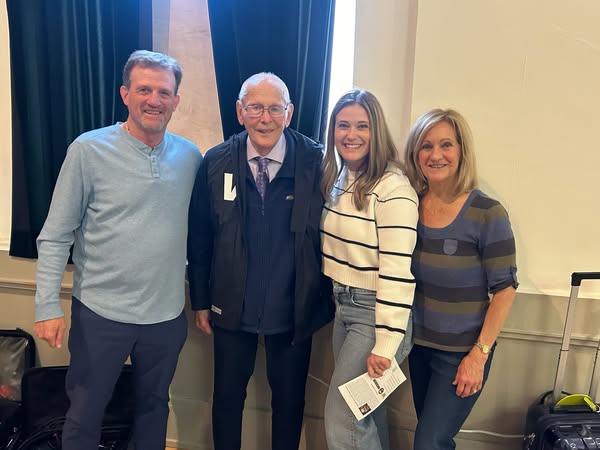
Larry Weber, Dr. Jack Daniels, Elizabeth Weber, and Julie Weber at the 40th Anniversary of the first ever USA Marathon Olympic Trials in Olympia, Washington, May 1984. Elizabeth is our daughter, Julie is my wife.